

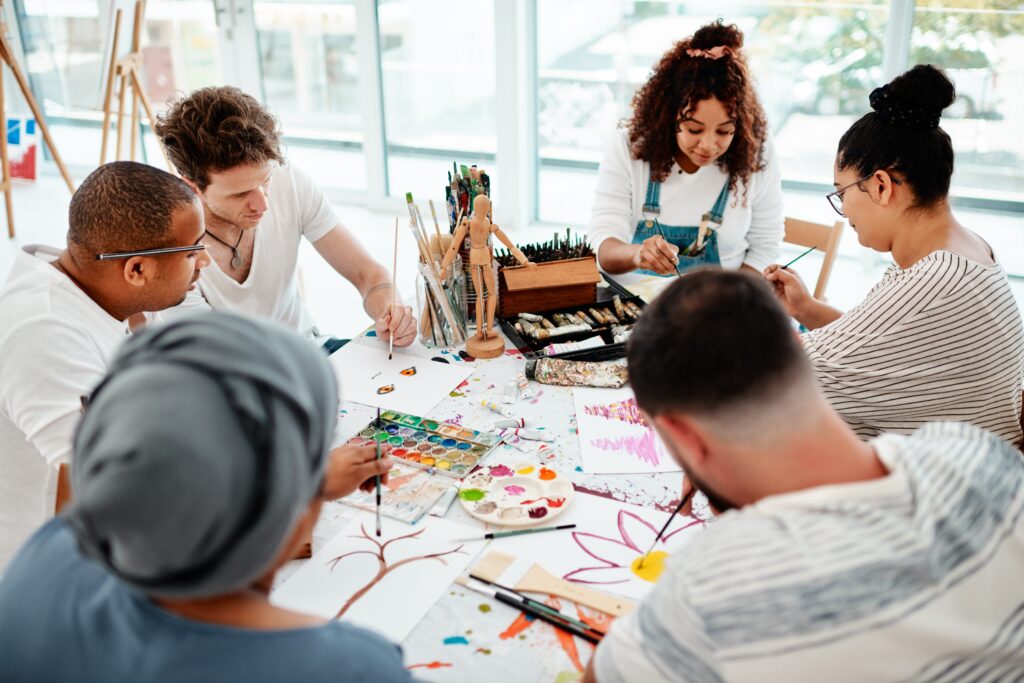
Understanding art therapy in addiction treatment
What is art therapy, and how does it work?
Art therapy for addiction treatment is a specialized therapeutic technique that uses creative processes to address underlying issues related to substance use. Options may include:
- Painting
- Drawing
- Sculpting
When guided by a licensed clinician, art therapy provides a nonverbal outlet to safely explore emotions, identify triggers and build healthier coping skills.
Unlike an art class, the focus is not on creating something beautiful. The goal is insight and healing. At Beach House Center for Recovery, patients work with a licensed clinician who helps them reflect on their artwork and connect it to their recovery journey.
The science behind creative expression and healing
Art therapy is a scientifically supported complementary treatment for addiction recovery. It gives patients the opportunity to express themselves artistically, which:
- Stimulates the brain’s reward system
- Lowers cortisol, anxiety and stress
- Supports emotional regulation
- Helps patients externalize negative, subconscious or traumatic memories
Substance use disorders often affect brain regions tied to impulse control, reward and emotional processing. According to the National Institute on Drug Abuse, addiction changes how the brain responds to stress and reward.
Creative therapies for substance abuse can help retrain these systems by promoting healthier emotional responses.
Integrating art therapy into addiction recovery is a safe way to help patients:
- Express, analyze and release complex negative emotions when words aren’t enough
- Identify and reframe negative thought patterns
- Ground themselves in the present moment
Over time, these skills support better decision-making and relapse prevention.
How art therapy addresses emotional trauma
Processing unspoken emotions through visual expression
Traumatic memories are often stored in non-verbal parts of the brain. This is one of the reasons trauma can feel overwhelming or hard to explain. Artmaking helps patients bypass the limits of speech, giving them a safe, nonjudgmental way to express what they feel.
Art therapy techniques for trauma may include drawing a memory, creating a visual timeline or using color to represent emotional states. These exercises allow patients to explore difficult experiences safely and at their own pace.
For individuals working through art therapy for PTSD recovery, this process can reduce avoidance and increase emotional awareness.
Breaking through verbal communication barriers
Some patients struggle with traditional talk therapy, especially early in treatment. Shame, fear or confusion can make it hard to open up.
Art therapy offers a low-pressure setting that does not require constant eye contact or verbal explanation. This can be especially helpful for:
- Trauma survivors
- Patients with depression or anxiety
- Neurodivergent individuals
- Those new to treatment
As comfort grows, many patients find they are better able to engage in individual and group counseling.
Art therapy techniques used in recovery
Painting, drawing and visual journaling
Patients can use colors and shapes to represent emotions. This creates a space to express intense feelings and process traumatic experiences in a safe, non-verbal setting.
Visual journaling combines images and short written reflections. It helps patients track emotional patterns and recognize triggers over time.
These techniques are often used in art therapy for depression and anxiety because they help reduce rumination (thought loops) and promote self-awareness.
Sculpture and clay work for grounding
Sculpture and clay work provide tangible, sensory outlets for emotional release. Patients translate internal emotions into physical form.
The sensory experience of shaping clay can also calm the nervous system. This grounding effect supports emotional regulation and stress reduction. Many patients report feeling more present and centered after hands-on sessions.
Mandala creation for mindfulness
Mandalas are symmetrical geometric designs that radiate from a central point. When used in therapy, they offer a structured and meditative outlet for emotional processing. Creating or coloring a mandala can:
- Slow racing thoughts
- Improve focus
- Promote relaxation
- Encourage self-reflection
This practice supports mindfulness, a key skill in long-term addiction recovery.
Who can benefit from art therapy in recovery?
Art therapy helps people of all ages reduce stress, build self-esteem and process complex emotions regardless of artistic skill. It is often beneficial for:
- Patients with co-occurring mental health disorders
- Trauma and PTSD survivors
- Patients with depression or anxiety
- Those who struggle with traditional talk therapy
Because addiction and mental health conditions frequently occur together, integrated care is essential. National data show that nearly half of individuals with a substance use disorder also experience a co-occurring mental health condition. Art therapy supports both sides of this dual diagnosis.
Art therapy at Beach House Center for Recovery
Our art therapy program
At Beach House Center for Recovery, we use art therapy as part of a structured and evidence-based treatment model.
Patients participate in creative sessions guided by licensed clinicians who understand addiction and mental health care. The focus is on emotional healing, self-awareness and building practical coping skills.
Art therapy may be included as part of a personalized residential treatment program and integrated with other specialized therapies offered at our Juno Beach, FL, campus.
Integrating art therapy with comprehensive care
Art therapy is not effective as a stand-alone addiction treatment program. It’s most effective when combined with:
- Individual counseling
- Group therapy
- Trauma-informed treatment
- Psychiatric evaluation
- Medication management (when appropriate)
- Mental health services for co-occurring disorders
This integrated approach supports both emotional healing and relapse prevention.
To learn more about our available programs or take the first step toward recovery, contact our admissions staff today for a confidential consultation.
FAQs about art therapy for emotional healing in recovery
Do I need to be good at art to benefit from art therapy?
No. Art therapy focuses on emotional expression, not artistic talent. Simple drawings, colors or shapes can provide meaningful insight and support healing.
How is art therapy different from an art class?
An art class teaches technique and focuses on the final product. Art therapy is led by a licensed clinician and centers on emotional processing. The artwork becomes a tool for discussion and personal growth.
Can art therapy replace traditional counseling?
No. Art therapy is usually part of a broader treatment plan, complementing individual and group counseling sessions. Many patients find creative expression helps them engage more fully in talk therapy over time.
How long does it take to see benefits from art therapy?
Some patients feel relief after a few sessions, especially in reducing stress. However, deeper emotional healing can take weeks or months. Progress depends on individual needs, trauma history and overall treatment goals.