


Beach House Center for Recovery offers top-tier, patient-centered addiction treatment in Florida.
Our comprehensive addiction treatment programs address the physical aspects of addiction and the complex interplay of mental and emotional factors. Our commitment to compassionate care ensures patients can safely and comfortably break free from the chains of substance use disorders.
A strong therapeutic alliance is at the heart of our substance use addiction treatment programs. We forge partnerships with our patients to identify the most suitable, effective and comfortable treatment plans, incorporating substance abuse specialized therapy to meet each individual’s unique needs.
Understanding drug and alcohol treatment outcomes
Our drug and alcohol treatment programs are distinguished by a client-directed, outcome-informed approach. The CDOI approach is inspired by the latest addiction research into the best predictors of positive treatment outcomes, and is characterized by at least five key components (Proctor and Herschman, 2015):
- A strong emphasis on “therapeutic alliance“
- Evidence-based therapies for treating addiction
- Evidence-based measurement tools for tracking outcomes
- Weekly clinical supervision of individual therapy sessions
- Regular third-party evaluation of treatment process and outcomes
- Therapeutic alliance
- Client-Directed, Outcomes-Informed approach
- Outcomes tracking
- Clinical supervision
- Multidisciplinary team meetings
- Family program
Each of these components is critical to helping us fulfill the sacred pledge we make to every client: a free and sober life grounded in people, purpose and passion. Individual therapy for substance abuse plays a vital role in strengthening the therapeutic alliance and enhancing recovery outcomes. For more on how we go about integrating each of these components in our drug and alcohol programs, as well as the research that inspires this approach, check out our Clinical Excellence Practices.
Understanding drug and alcohol treatment outcomes
Drug and alcohol treatment outcomes illustrate how well a treatment program is helping someone heal from substance use. They look beyond sobriety, encompassing emotional health, daily functioning, and overall quality of life outcomes.
What treatment outcomes really mean in recovery
Treatment outcomes include short-term and long-term changes:
- Short-term outcomes
Reduced cravings, improved coping skills, and steady participation in therapy. - Long-term outcomes
Stable sobriety, emotional wellness, stronger relationships, and day-to-day stability.
Together, these outcomes for substance abuse show whether recovery is taking hold.
How rehab centers measure success beyond sobriety rates
At Beach House Center for Recovery, our treatment programs measure success based on whether patients are:
- Abstaining from alcohol or drugs
- Staying engaged in therapy or aftercare
- Building coping skills
- Working or going to school
- Creating healthier routines and relationships
Why tracking outcomes is vital for lasting recovery
Tracking outcomes helps identify what’s working and where someone might need extra support. Whole-person monitoring (e.g., emotional and behavioral health and life skills) allows for highly personalized care and recovery success.
Our client-directed, outcome-informed approach (CDOI)
Our CDOI model puts patients’ progress first. We tailor care based on feedback and clinical oversight. By tracking an individual’s well-being, routines, and work or school engagement, we support their lasting recovery far beyond sobriety.
Personalized care guided by real-time feedback
The CDOI approach relies on several key components that help us tailor treatment to an individual’s unique needs and treatment goals:
- A strong emphasis on the relationship between patient and clinician
- Evidence-based therapies for treating addiction
- Outcome measurement tools to track progress
- Weekly clinical supervision of therapy sessions
- Regular third-party evaluation of the treatment process and results
Together, these ensure each patient receives responsive and personalized care, reflecting our best practices in effective drug and alcohol treatment and outcome-informed addiction treatment.
Patient participation and engagement drive treatment effectiveness
At Beach House Center for Recovery, patients play an active role in their recovery.
They actively participate in therapy, giving feedback and engaging in treatment planning (one of the key predictors of success). This involvement helps individuals stay on track with their recovery journey and achieve meaningful, lasting success.
Strategies to maintain patient retention and accountability
High patient retention is another key indicator of long-term recovery. Our treatment approach supports retention through:
Multidisciplinary team meetings to coordinate care
Weekly supervision of therapy sessions
Family programs to involve loved ones in recovery
Ongoing evaluation of treatment outcomes
These strategies help patients remain engaged, supported and accountable throughout their treatment, driving better results and improving lasting success.
How do Beach House Center for Recovery treatment outcomes compare to competitors?
Evidence-based recovery data and benchmarks
Beach House Center for Recovery stands out nationally and locally due to our commitment to measuring, tracking and continually improving treatment outcomes.
To better understand how our patients fare after rehab treatment, we invited an independent third-party organization, Map Health Management, to conduct a follow-up survey with 700 of our patients.
This research focused on the following key indicators of success:
- Sobriety at the end of 30 days
- Full-time school or work
- Long-term behavioral and emotional health measures
These benchmarks help us understand how our patient outcomes compare to those from other treatment centers nationwide.
Was Not Using at End of Month
Full Time School or Was Employed This Month
Patients who relapsed
Transparent reporting and commitment to measurable progress
We share our results openly and use them to continually refine our programs.
Tracking these outcomes ensures every patient receives the highest-quality and most effective care. By holding ourselves accountable and transparently reporting results, we remain committed to measurable progress for every single person in our programs.
This ensures our patients achieve meaningful, lasting recovery.
High rates of patient retention in addiction treatment
Why patient retention matters for long-term sobriety
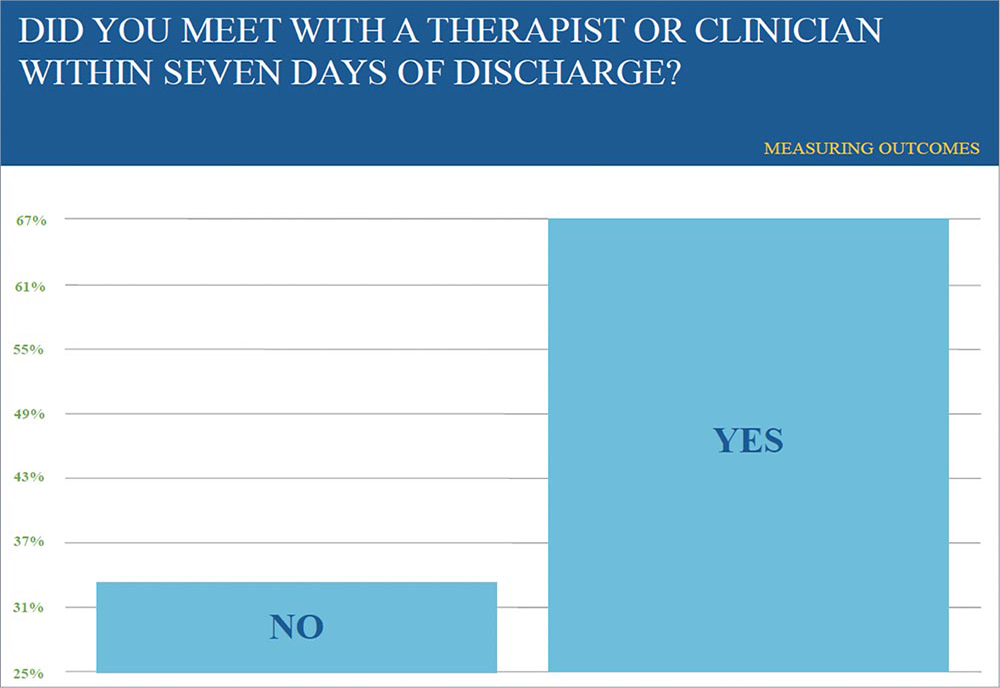
Beach House Center for Recovery patients enjoy high rates of retention in treatment, which is another measurable indicator of success in recovery. For example, 67% of our patients met with a clinician within seven days of discharge. That level of follow-through with a continuing care plan is rare in the addiction treatment world.
Our strategies to encourage ongoing engagement
We offer scheduled follow-ups, easy access to therapy sessions and individualized care plans. These strategies make it simpler for patients to continue participating in their recovery journey.
Building trust and accountability throughout recovery
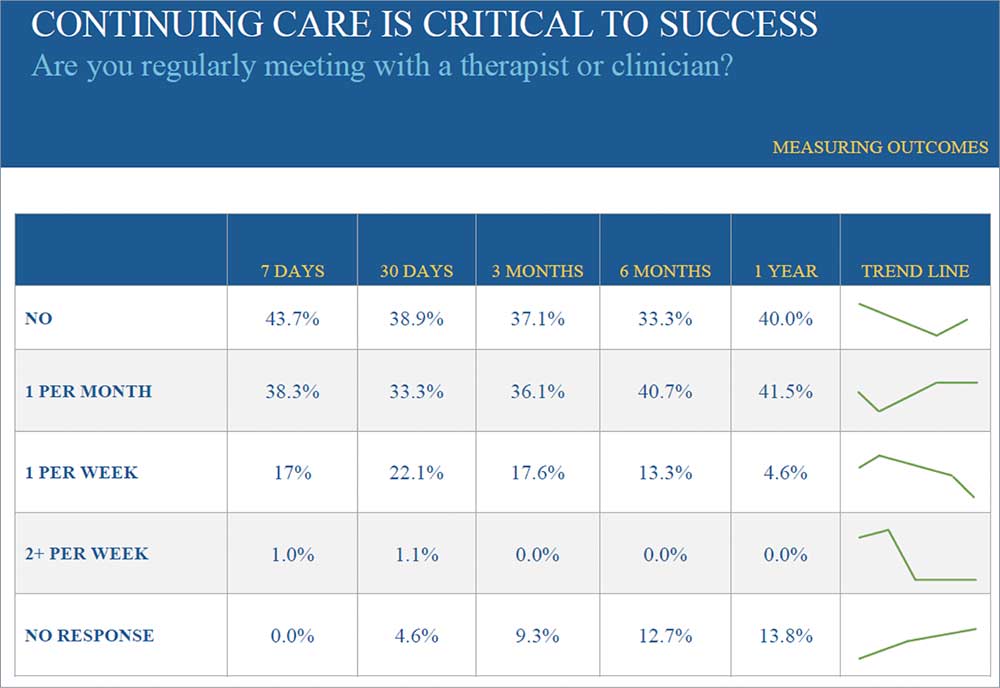
Even one year after leaving treatment, 41.5% of patients continued to meet with a clinician at least once a month. These high rates of retention reflect both the trust patients place in our team and the accountability structures we create to support long-lasting recovery.
Quality-of-life and patient satisfaction measures
Tracking progress beyond addiction recovery
Recovery is a way to improve your quality of life. We ask patients to share their experiences and track progress in areas such as personal satisfaction, emotional well-being and day-to-day functioning.
Emotional well-being, relationships and self-efficacy metrics
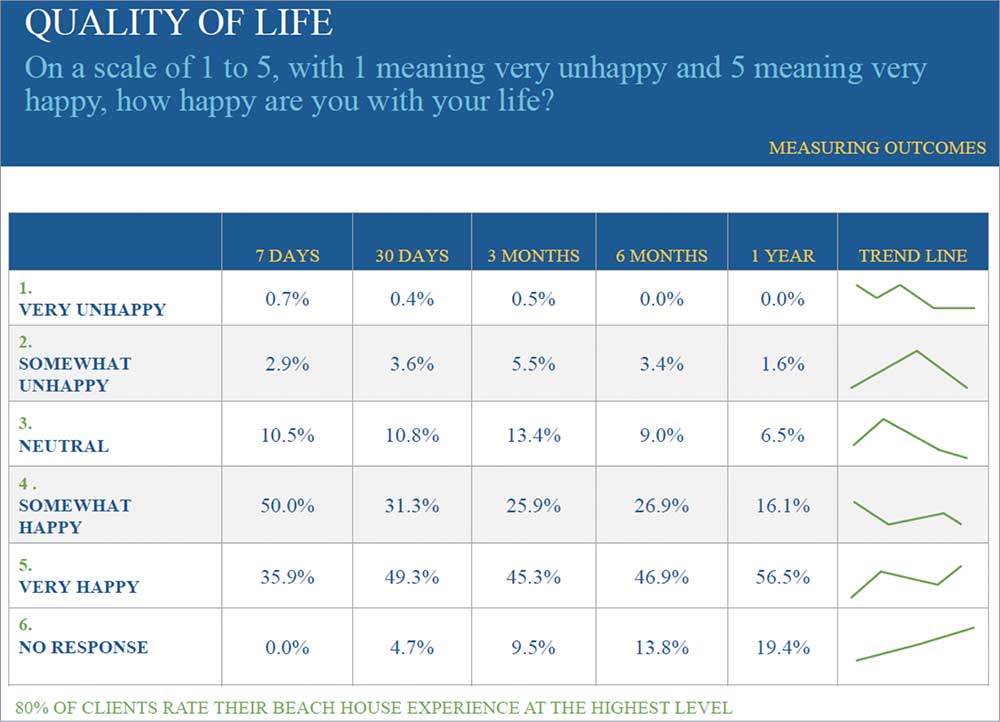
One year after treatment, 56.5% of our patients described themselves as “very happy.” Our programs also focus on improving relationships and building self-confidence, helping patients regain control and purpose in their lives.
Continuous improvement through patient feedback
Patient feedback helps us continually refine our programs. More than 80% of patients rated their Beach House experience at the highest level and over 90% said they would recommend Beach House to a friend or family member.
Improving treatment outcomes through evidence-based care
Role of therapy, medication and holistic interventions
We use a blend of clinical therapy, medication-assisted treatment (when appropriate) and holistic services to provide effective drug and alcohol treatment. This combination supports both the physical and emotional sides of recovery.
Data-driven methods to prevent relapse
Our team uses real-time outcome data, patient feedback and clinical assessments to identify early relapse warning signs. This means we can adjust care plans quickly and improve long-term recovery success rates.
Integrating medical and psychological assessments
Each patient receives ongoing medical, psychiatric and therapeutic evaluations. These assessments help us personalize treatment and ensure the program remains effective at every stage.
Frequently asked questions about rehab outcomes
What determines a successful rehab outcome?
Staying sober, feeling emotionally healthier, rebuilding stability and staying engaged in treatment and support make for a successful rehab outcome.
How long does it take to measure recovery success?
Most programs measure progress at 30 days, 90 days, six months and one year to see how recovery is holding up over time.
Do relapse rates mean treatment failure?
No. A relapse is a setback, not a failure. It often means your care plan needs adjustment or stronger support.
What role does aftercare play in long-term recovery?
Aftercare is essential. Ongoing therapy and support groups help you manage triggers and stay on track long-term. At Beach House Center for Recovery, we provide continuing care services for as long as you need them to support your ongoing recovery and long-term sobriety.
How do treatment outcomes differ between programs?
Outcomes vary based on the quality of care, use of evidence-based treatments and how well programs support patients after discharge.
Are Beach House Center for Recovery rehab outcomes verified independently?
Yes. Our treatment outcomes are evaluated by independent third-party experts to ensure accuracy and transparency.