

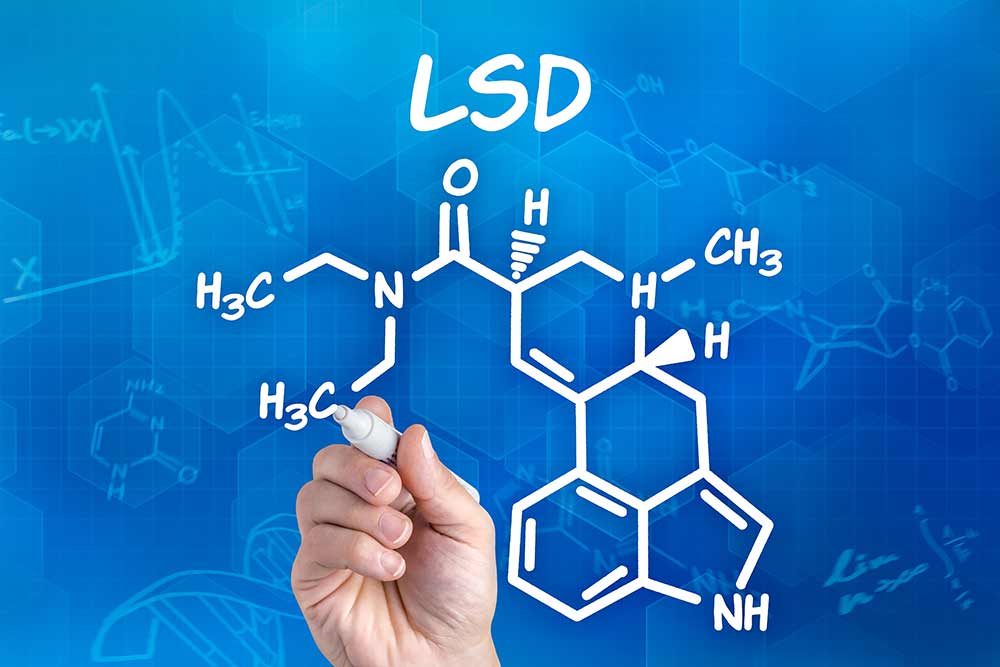
What Is LSD?
Lysergic acid diethylamide, most commonly known as LSD, is a strong, man-made hallucinogen that alters a person’s perception, thoughts, feelings, and situational awareness.
How It’s Used and Common Street Names
LSD is usually taken orally (e.g., patches, tablets, capsules, liquid, etc.) and goes by many street names, such as:
- Lucy, Lucy In the Sky With Diamonds
- California Sunshine, Yellow Sunshine
- Electric Kool-Aid
- Heavenly Blue
- Purple Haze
- Strawberry Fields
- Sunshine Tabs
Is LSD Legal in the U.S.?
LSD is illegal in the United States and all U.S.-owned territories.
It is classified as a Schedule I controlled substance, meaning it currently has no accepted medical use and a high potential for abuse.
How What Does LSD Do to the Brain?
Brain Chemistry and Psychological Effects
LSD is known as a mind-altering drug that affects the action of a brain chemical called serotonin. Serotonin helps control mood, behavior, and thinking.
LSD health effects can also include hallucinations or “trips” that can last several hours, even after the substance has been cleared from the bloodstream. Other psychological symptoms of LSD use may include:
- Distorted sense of time and identity
- Altered sense of time
- Distorted sense of the size and shape of objects, movements, color, sounds, touch, and body image
- Sense of euphoria
- Delusions or hallucinations
- Intense sense of fear
How Does LSD Affect the Body?
Physical Side Effects and Risks
Short-term physical health effects of LSD may include:
- Dilated pupils
- Changes in body temperature
- Increased heart rate and blood pressure
- Sweating, chills, and nausea
- Loss of appetite
- Insomnia
- Dry mouth
- Tremors or shaking
More severe but less common LSD side effects may include:
- Blurred vision
- Muscle weakness or twitching
- Dizziness
- Seizures
- Hyperthermia
Short-term side effects are extremely common with LSD use.
Individuals with pre-existing mental health conditions or a history of LSD use have a higher risk of experiencing more severe, long-term health effects.
Long-Term Health Effects of LSD Use
Mental Health Risks of LSD
- Hallucinogen Persisting Perception Disorder (HPPD)
HPPD is a long-term mood disorder resulting from LSD use. It causes intermittent hallucinations that can ebb and flow for weeks, months, or even years after the last use. - Psychosis
Psychosis is a mood disorder in which individuals experience a loss of contact with reality. It is often characterized by hallucinations, delusions, disordered thinking, and social withdrawal. - Anxiety and Depression
LSD may contribute to long-term anxiety or depression, especially if a person has a frightening or negative experience while under the influence of LSD. LSD also alters serotonin receptors in the brain, which can worsen existing anxiety or depression symptoms, cause mood dysregulation, and negatively impact perception.
If you or a loved one is experiencing long-term health effects of LSD use or are ready to quit, talk to a skilled addiction specialist at Beach House Center for Recovery. We are here to help you overcome your addiction and reclaim a healthier, happier life in sobriety.
Can You Overdose on LSD?
Yes, it is possible to overdose on LSD. While LSD is not considered physically addictive (it doesn’t cause compulsive drug-seeking behavior), it is psychologically additive and is potentially dangerous, especially in large amounts.
High doses of LSD can lead to serious mental and physical health complications.
LSD users are at an increased risk for developing long-term psychosis, including symptoms of schizophrenia or severe depression, which can deeply affect thoughts, emotions, and behavior.
LSD overdose symptoms may include:
- Vomiting
- Seizures
- Difficulty breathing
- Hyperthermia or high body temperature
- Unconsciousness
- Coma
If you believe someone is experiencing an LSD overdose, call 9-1-1 or go to your nearest emergency room immediately.
LSD Addiction and Warning Signs
Over time, individuals may find themselves relying on the drug to escape reality or cope with emotional distress. This can lead to LSD abuse symptoms and behavioral red flags, including:
- Frequent use despite negative consequences
- Increased tolerance
- Persistent cravings
- Preoccupation with using LSD
- Significant distress or impairment at work, home, school, or in relationships
- Risky behaviors while under the influence
- Social withdrawal
Safe and Effective Treatment for LSD Abuse
Medical Detox and Behavioral Therapies
Beach House Center for Recovery offers several specialized treatment programs to help individuals overcome LSD addiction. They include:
- Medically supervised detox
- Individual, group, and family therapy
- Cognitive Behavioral Therapy (CBT)
- Dialectical Behavioral Therapy (DBT)
- Motivational Interviewing (MI)
Why Choose Beach House Center for Recovery for LSD Recovery
At Beach House Center for Recovery, you can expect personalized, patient-first care from your very first phone call. From medical detox to specialized therapies and aftercare support, every part of your experience is designed with your long-term healing in mind.
Talk to one of our treatment specialists today and get started on your path to overcoming the negative health effects of LSD. We are dedicated to providing a safe, supportive environment that meets your unique needs.
FAQs About LSD Health Effects and Risks
Can LSD cause permanent damage?
Yes, LSD can cause lasting psychological effects. While rare, conditions like hallucinogen persisting perception disorder (HPPD) can severely impact daily functioning and may not fully resolve, even after stopping LSD use.
How long do LSD side effects last?
LSD side effects typically last 8-12 hours, but some psychological symptoms (e.g., anxiety, depression, and confusion) can linger for several days.
In rare cases, long-term effects like hallucinations, flashbacks, or HPPD may persist for weeks, months, or even years.
Is LSD dangerous?
LSD is unpredictable and can trigger hallucinations and panic attacks. High doses may also lead to risky behavior, accidents, or even mental breakdowns.
For those with pre-existing mental health conditions, LSD can make symptoms worse or trigger more severe conditions, like schizophrenia or severe depression.
Related Articles :
How to Find a Good Therapist for Your Recovery —Components of a Strong “Therapeutic Alliance”
Common Substance Use Disorders
Keep Learning: 12 Things You Might Not Know About Addiction-Related Dangers